
There was a time when you knew your friends and family’s phone numbers off by heart. More than a dozen numbers sat ready and waiting, somewhere easily accessible in your cranium. You knew how to drive to infinite destinations without the need for reassurance or directions via GPS. The way there was ingrained in your memory, and often, it only took one time for you to learn. Your mind was trained to hold onto things, from simple information like birthdays and common recipes to academic knowledge traditionally retained and ready to activate. We used to be more self sufficient twenty some years ago. We used our brains more twenty odd years ago. We used to remember things better about twenty years ago.
Now we just Google it.
And its got me thinking…are there some negative side-effects to this over-reliance?
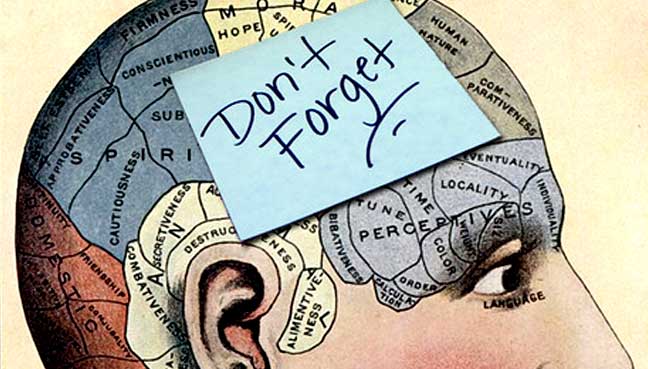
In particular, I’m looking at the impact technology will have on our human memory. There is the old saying, ‘use it or lose it’. And I hate to oversimplify such a complex matter, but I kinda have to agree.
I’ll give you a little background info to help you see my point of view. I have a family history of Alzheimer’s. On both sides. So I’m pretty much screwed. But after some research and learning about ways to delay the deterioration, I saw a glimmer of hope. I recall reading that social and mental stimulation strengthen connections between nerve cells in the brain. And that mental exercises such as practicing memory, can make a big difference as we age.
But what if we use the internet and tools like Alexa or Siri to do our thinking and remembering for us? Does this mean we can expect an increase in age-related mental illnesses like Alzheimer’s? Sadly, I think so.
Far too often do we focus on the benefits of products that are sold to us, and not enough on the profitability of creating a dependance. Once big companies and tech giants introduce a gadget that provides a short-cut in our daily lives, we get lazy. Its simple, once we don’t have to do something anymore, we stop doing it. But there may be one little long term cost we didn’t quite factor in…our well being.
So I’ve outlined the problem. But what of the solution?
USE YOUR BRAINS.
Ok, I’ll illustrate with the most flexible strategy I can think of…
Be present. Listen, in real time. When someone speaks to you, pay attention. (I am working on this, *insert my husband laughing*) And when you see that person again, show them that you remembered their advice or certain details of their life that most people forget. This is the best way to practice information retention. This also reinforces the social component that will keep your brain stimulated over the years.
Because although life is easier with technology that remembers everything for us, we need to know how to exist without it. I mean, how many apocalyptic doomsday films need to be made before people realize that core survival skills will always be essential? Memory included.
*Now without looking up, what was my advice?
 giselleandbeyond
Leave a comment